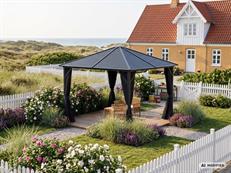
Garden gazebos
Garden gazebos – create a comfortable outdoor living space
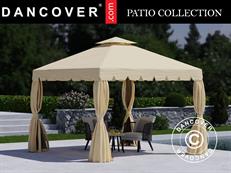
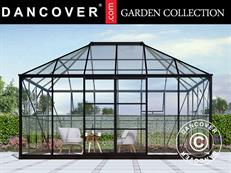
A garden gazebo creates a sheltered and clearly defined space for dining, relaxing and spending time outdoors. Depending on the model, it can provide shade, shelter from rain and a practical setting for garden furniture, an outdoor kitchen, a hot tub or a quiet lounge area.
Garden gazebos are available in different materials and roof constructions, from modern aluminium and steel structures to classic wooden gazebos and lighter seasonal designs. The right choice depends on how you want to use the space, whether the gazebo will remain outdoors permanently and how much maintenance you prefer.
Which type of garden gazebo should you choose?
The roof and frame materials have a major influence on both appearance and everyday use.
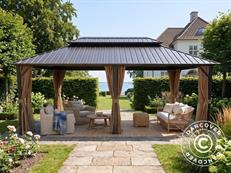
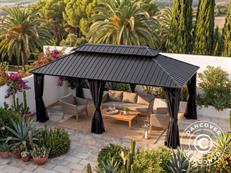
Metal-roof gazebos provide solid overhead shelter and are well suited to permanent patio and garden installations.
Polycarbonate-roof gazebos create a bright covered area by allowing daylight through the roof while providing a rigid and impact-resistant structure.
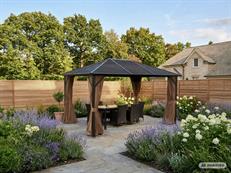
Wooden gazebos offer a warmer, more traditional appearance that fits naturally into many classic and landscaped gardens.
Fabric-roof gazebos have a lighter and softer expression and are generally more suitable for seasonal outdoor living.
Choose according to the level of shelter, appearance and maintenance that suits your garden.
Garden gazebo or bioclimatic pergola?
A garden gazebo normally provides a fixed roof and consistent overhead shelter.
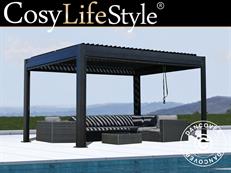
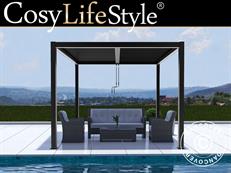
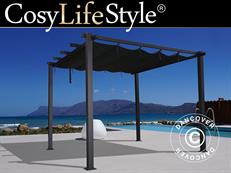
A [bioclimatic pergola] works differently. Its adjustable roof louvres allow you to control sunlight, shade and ventilation during the day and close the roof when more shelter is required.
Choose a garden gazebo if you prefer a fixed outdoor room that requires little adjustment during use. Choose a bioclimatic pergola if changing the amount of sunlight and airflow is an important part of how you want to use the space.
For occasional parties or events where the shelter must be transported and stored afterwards, a [FleXtents® pop-up gazebo] may be a more practical alternative.
Can a garden gazebo stay outside all year?
It depends on the construction.
Many gazebos with aluminium or steel frames and solid metal or polycarbonate roofs are designed for long-term outdoor installation. Lighter structures with fabric canopies may require seasonal storage or removal of the roof cover during unsuitable weather.
The structure must always be assembled and anchored according to the instructions and installed on a stable, suitable surface.
Snow, strong wind and heavy rain can place considerable loads on a gazebo, so always follow the specifications and weather guidance for the individual model rather than assuming that every permanent-looking gazebo has the same strength.
Choose the right size and location
Start with what you want to place underneath the gazebo.
A compact model may be enough for a small table and chairs, while a dining set, lounge furniture, hot tub or outdoor kitchen requires considerably more space. Remember to allow room for chairs to move and for people to walk comfortably around the furniture.
Marking the dimensions on the ground before ordering can help you understand how much space the structure will actually occupy.
Also consider:
- sunlight during the day
- prevailing wind
- access from the house and garden
- views from inside the gazebo
- drainage around the installation area
- access to electricity for lighting or heating
A position close to the house can work particularly well for dining, while a gazebo farther into the garden can create a quieter retreat.
Materials and maintenance
Different materials require different levels of care.
Aluminium generally requires relatively little maintenance and is easy to clean.
Powder-coated steel provides a strong structure but should be checked periodically for scratches or damage to the protective finish.
Wood creates a natural and traditional appearance but normally requires more regular treatment to protect it from weathering.
Fabric roofs and curtains should be kept clean and dry and may need to be removed and stored during winter or severe weather.
Whatever the material, periodically check the roof, joints, fixings and anchoring so minor issues can be addressed before they develop.
Make the gazebo more comfortable
The right accessories can turn a simple shelter into a more inviting outdoor room.
Depending on the model, useful options include:
- curtains for privacy and additional shelter
- mosquito nets for warm summer evenings
- LED lighting
- patio heaters
- suitable outdoor furniture
- privacy screens
Lighting can extend the hours you use the gazebo, while a suitable [patio heater] can improve comfort during cooler evenings.
Always check that accessories are compatible with the specific gazebo model.
Find the right outdoor shelter
A garden gazebo is a good choice if you want a freestanding structure with a fixed roof and a clearly defined outdoor living area.
If adjustable shade and ventilation are more important, consider a [bioclimatic pergola]. If you mainly need temporary shelter for parties, markets or events, a pop-up gazebo offers greater portability.
The best solution depends on whether your priority is permanent outdoor living, adjustable shelter or temporary flexibility.
Frequently asked questions about garden gazebos
What is a garden gazebo?
A garden gazebo is a freestanding covered outdoor structure designed to create shelter for dining, relaxation and other garden activities. Designs range from permanent metal or wooden structures to lighter seasonal models.
Is a garden gazebo waterproof?
It depends on the roof material and individual model. Gazebos with solid metal or polycarbonate roofs can provide reliable protection from rain, but always check the product specifications and weather limitations.
Does a garden gazebo need to be anchored?
Yes. The gazebo must be assembled and secured according to the instructions for the individual model. Correct anchoring and a stable, level installation surface are important for structural stability.
Can curtains and mosquito nets stay on all year?
Usually not in all conditions. Curtains and mosquito nets are more vulnerable than the main structure and may need to be removed, cleaned and stored during winter or severe weather, depending on the model.




-
 2,429.01 €Excl freight cost
 Buy nowIn stock
 -
1,987.33 €Excl freight cost
Buy nowIn stock
-
409.49 €Excl freight cost
Buy nowIn stock
-
3,812.42 €Excl freight cost
Buy nowRemote stock
-
481.71 €Excl freight cost
Buy nowIn stock
-
279.13 €Excl freight cost
Buy nowIn stock
-
1,688.77 €Excl freight cost
Buy nowIn stock
-
909.21 €Excl freight cost
Buy nowIn stock
-
909.21 €Excl freight cost
Buy nowIn stock
-
779.24 €Excl freight cost
Buy nowIn stock
-
2,017.88 €Excl freight cost
Buy nowIn stock
-
2,017.88 €Excl freight cost
Buy nowIn stock
-
1,558.95 €Excl freight cost
Buy nowIn stock
-
1,840.32 €Excl freight cost
Buy nowIn stock
-
1,008.82 €Excl freight cost
Buy nowIn stock
-
819.55 €Excl freight cost
Buy nowIn stock
-
1,039.07 €Excl freight cost
Buy nowIn stock
-
1,039.07 €Excl freight cost
Buy nowIn stock
-
214.20 €Excl freight cost
Buy nowIn stock
-
250.55 €Excl freight cost
Buy nowIn stock
-
279.13 €Excl freight cost
Buy nowIn stock
-
315.48 €Excl freight cost
Buy nowIn stock
-
315.48 €Excl freight cost
Buy nowIn stock
-
1,091.13 €Excl freight cost
Buy nowIn stock